
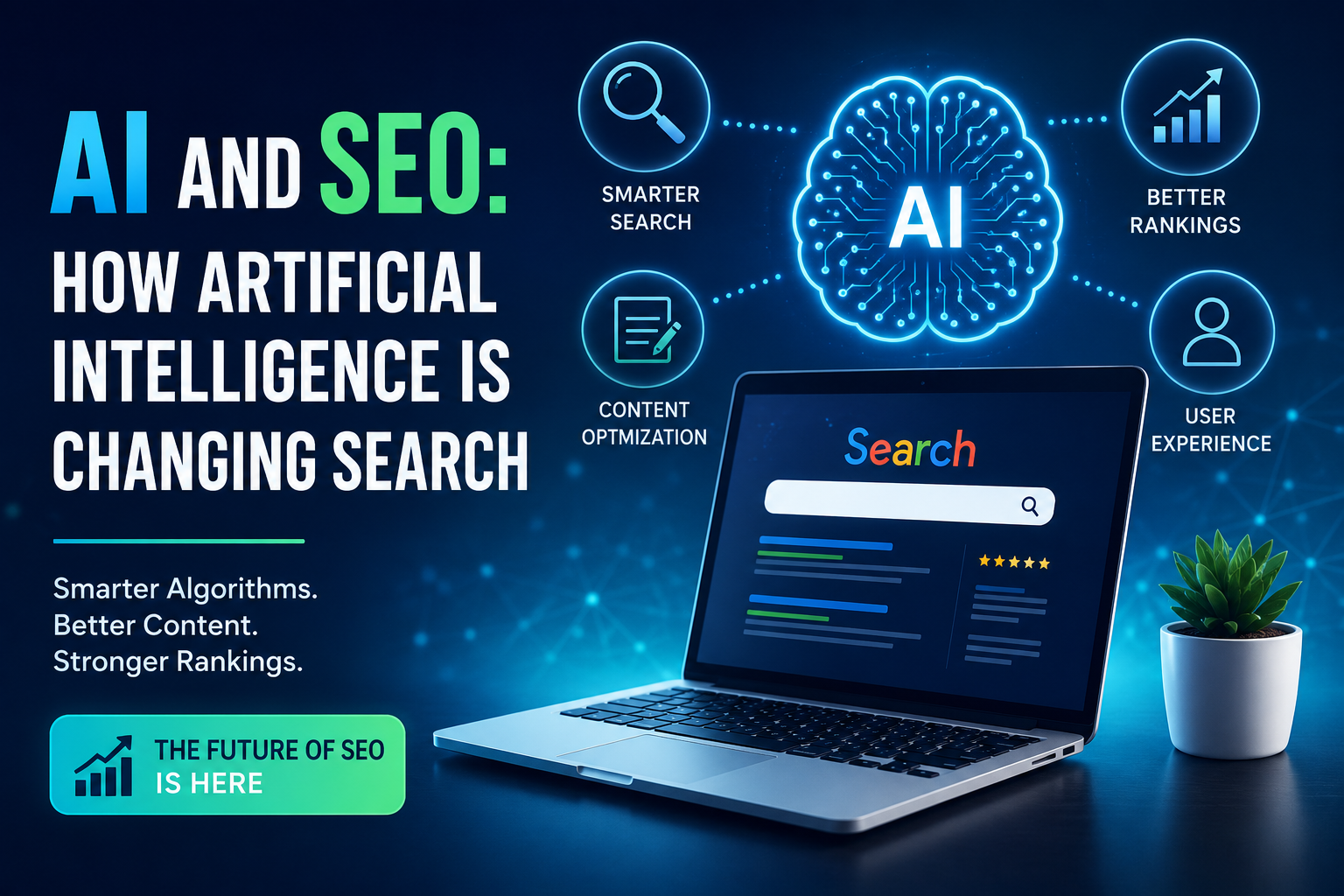
Meta Title: AI and SEO: How Artificial Intelligence Is Changing Search in 2026
Meta Description: Discover how AI is transforming SEO, from smarter search algorithms to AI-powered content creation. Learn practical strategies to improve your website rankings in 2026.
Primary Keyword: AI and SEO
Secondary Keywords: Artificial Intelligence in SEO, AI SEO Tools, Future of SEO, Search Engine Optimizatio
AI and SEO: How Artificial Intelligence Is Changing Search
Search engine optimization has evolved significantly over the past decade, and artificial intelligence (AI) is now at the center of that transformation. Google no longer relies solely on matching keywords to search queries. Instead, AI helps search engines understand context, user intent, and the overall quality of content. This shift means businesses and marketers must focus on creating valuable, user-focused experiences rather than simply optimizing for keywords.
Whether you’re a business owner, digital marketer, or someone learning SEO, understanding the relationship between AI and SEO is essential for staying competitive in today’s digital landscape.
What Is AI in SEO?
Artificial Intelligence in SEO refers to the use of machine learning and intelligent algorithms to improve how search engines understand, rank, and display web content. AI also powers many SEO tools that help marketers with keyword research, content optimization, technical audits, and performance analysis.
Instead of rewarding websites that simply repeat keywords, modern search engines evaluate whether a page genuinely answers the user’s question and provides a positive experience.
How AI Is Changing Search
Search engines have become much smarter than they were a few years ago. They can now understand the meaning behind a search rather than just the exact words a user types.
For example, if someone searches for “best laptop for students with a low budget,” Google doesn’t just look for pages containing those exact words. It identifies pages that discuss affordable laptops, compare features, and help students make informed decisions.
This ability to understand search intent has made search results more accurate and useful.
Benefits of AI in SEO
AI is making SEO more efficient and effective in several ways.
Smarter Keyword Research
AI-powered tools can identify valuable keywords, analyze search intent, and suggest related phrases that users are searching for. This helps marketers create content that matches what people actually want to find.
Better Content Optimization
Modern AI tools can analyze your content and recommend improvements such as adding relevant headings, improving readability, answering missing questions, and optimizing keyword placement without overusing keywords.
Improved User Experience
Google values websites that load quickly, are mobile-friendly, and provide a smooth browsing experience. AI helps search engines evaluate these factors, making user experience an important ranking signal.
Faster Data Analysis
Instead of spending hours analyzing website performance manually, AI tools can quickly identify technical issues, broken links, slow-loading pages, and other SEO problems that need attention.
Popular AI SEO Tools
Several AI-powered tools are helping marketers improve their SEO strategies.
- ChatGPT for content ideas and research
- Google Search Console for website performance insights
- Google Analytics 4 for user behavior analysis
- Semrush for keyword research and competitor analysis
- Ahrefs for backlink analysis and SEO audits
- Surfer SEO for content optimization
- Frase for creating SEO-focused content briefs
These tools save time while helping marketers make data-driven decisions.
Does AI Replace SEO Professionals?
The simple answer is no.
AI can generate ideas, analyze data, and automate repetitive tasks, but it cannot replace human creativity, strategic thinking, or industry experience.
Successful SEO still requires understanding your audience, creating trustworthy content, and making informed decisions based on business goals. AI should be viewed as a helpful assistant rather than a replacement.
Best Practices for Using AI in SEO
If you plan to use AI in your SEO strategy, keep these best practices in mind:
- Use AI to generate ideas, not final content.
- Always review and edit AI-generated text.
- Focus on solving real user problems.
- Write original, accurate, and helpful content.
- Add personal insights, examples, or case studies whenever possible.
- Keep your content updated with the latest information.
- Optimize for readability and user experience.
By combining AI with human expertise, you can create content that is both valuable to readers and optimized for search engines.
Common Mistakes to Avoid
Many website owners make the mistake of relying entirely on AI-generated content without editing or fact-checking it. Others focus too much on keywords while ignoring user intent.
Avoid these common mistakes:
- Publishing AI-generated content without reviewing it.
- Keyword stuffing.
- Copying content from other websites.
- Ignoring page speed and mobile optimization.
- Creating content only for search engines instead of real people.
Remember, Google’s goal is to reward helpful and trustworthy content.
The Future of AI and SEO
Artificial intelligence will continue to shape the future of search. As AI becomes more advanced, search engines will place even greater emphasis on content quality, expertise, and user satisfaction.
Businesses that create authentic, informative, and user-focused content will have a stronger chance of achieving long-term SEO success. Rather than fearing AI, marketers should learn how to use it responsibly to improve productivity while maintaining originality and credibility.
Final Thoughts
AI has transformed the way search engines understand and rank content, making SEO more intelligent than ever before. While AI tools can simplify many SEO tasks, genuine success still depends on creating high-quality content that answers users’ questions and provides real value.
The future of SEO isn’t about choosing between humans and AI—it’s about combining the efficiency of AI with human creativity, expertise, and strategic thinking. If you focus on helping your audience first, you’ll be well-positioned to succeed as search continues to evolve.